

Achieving Natural Hair Coverage with Customized Transplant Planning at Glamorous
Hair loss can affect confidence, appearance, and even the way we interact with others. For many men and women, the search for a lasting solution leads to surgical restoration. Yet not every procedure delivers the same results. If you are considering Hair Transplant in Islamabad , understanding why customized planning matters can help you choose wisely and avoid the stiff, “pluggy” look that gave older techniques a poor reputation. The difference between a result that looks artificial and one that nobody can detect lies in the planning.
Why One-Size-Fits-All Transplants Fall Short?
Every scalp is different. Hair density, curl pattern, hair caliber, skin tone, and the shape of the face all influence how a transplant should be designed. A generic approach that places grafts at the same angle and density for every patient almost always produces unnatural results.Natural hair grows in a precise pattern. Hairs along the front hairline are fine and irregular, while those further back are thicker and grow in clusters. The direction of growth changes at the temples, the crown, and the whorl. A skilled surgeon must replicate these details graft by graft. That level of precision only comes from a personalized plan built around the individual patient.
The Consultation: Where Planning Begins
A customized transplant starts long before any graft is extracted. During the initial consultation, a specialist evaluates several factors:
- Pattern and stage of hair loss. Male pattern baldness, female thinning, receding temples, and crown loss each demand a different strategy.
- Donor area quality. The back and sides of the scalp are usually the source of grafts. The surgeon assesses density, hair thickness, and the total number of grafts that can be safely harvested.
- Medical history. Conditions such as thyroid disorders, scalp diseases, or autoimmune problems can affect candidacy and results.
- Patient expectations. An honest conversation about what is realistically achievable prevents disappointment later.
A good clinic will also discuss the long-term picture. Hair loss is often progressive, so the design must account for how your hair may change over the next ten or twenty years. Using up the donor area too aggressively on a young patient can leave no reserve for future needs.
Designing the Hairline: Art Meets Science
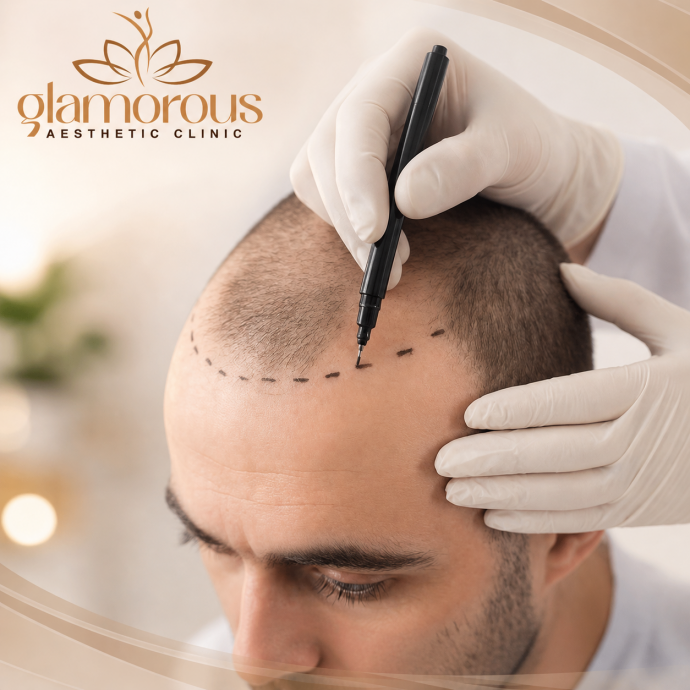
The hairline is the most visible element of any transplant, and it is where customization matters most. A well-designed hairline respects the patient’s age, facial proportions, and natural features.Surgeons often use the “rule of thirds” to balance the forehead, midface, and lower face. The hairline is placed to complement these proportions rather than simply pushed as far forward as possible. A hairline that is too low or too straight looks unnatural, particularly as the patient ages.Natural hairlines are never perfectly straight. They contain subtle irregularities and a soft, feathered transition zone made of single-hair grafts. Placing these finest grafts at the very front, with thicker multi-hair grafts behind, creates the gradual density that the eye reads as authentic.
Graft Distribution and Density
Achieving natural coverage means placing the right grafts in the right places. Grafts naturally contain one to four hairs. Single-hair grafts create softness at the hairline, while two- and three-hair grafts provide fullness in the mid-scalp and crown.Density planning is equally important. Because donor supply is limited, surgeons distribute grafts strategically, concentrating higher density in the most visible zones, typically the frontal third, and using lighter density toward the back. This creates the visual impression of fullness without exhausting the donor area.Angle and direction are just as critical. Grafts must be implanted at the same angle and orientation as the surrounding native hair. Even small deviations can produce a messy or “doll-like” appearance. Experienced surgeons make tiny recipient sites with exact control over depth, angle, and direction so the new hair blends in seamlessly.
Choosing the Right Technique
Modern transplantation offers several approaches, and the best choice depends on the individual case.
FUE (Follicular Unit Extraction) removes individual follicles directly from the donor area using a micro-punch tool. It leaves tiny, dot-like marks that are hard to see, allows shorter haircuts, and typically involves a quicker recovery.
FUT (Follicular Unit Transplantation) removes a thin strip of scalp, which is then dissected into grafts. It can be useful when a large number of grafts is needed in a single session, though it leaves a linear scar.
DHI (Direct Hair Implantation) uses a specialized pen-like implanter to place grafts directly, offering control over angle and direction, often without pre-made incisions.
A responsible specialist will recommend the technique that suits your hair type, degree of loss, and goals rather than promoting one method for everyone.
The Importance of Surgeon Skill and Team Experience
Hair transplantation is both a surgical procedure and an aesthetic craft. The surgeon plans the design and oversees the process, but a trained team also plays a major role in extracting, sorting, and implanting grafts. Careful handling keeps grafts healthy and improves survival rates once they are placed in the scalp.
When choosing a clinic, look for:
- Board-certified or appropriately qualified doctors
- Before-and-after photos of real patients, with consistent lighting and angles
- Transparent discussion of risks, costs, and expected timelines
- Hygienic facilities and clear aftercare support
Recovery and What to Expect
Understanding the timeline helps patients stay patient. In the first week, small scabs form and gradually fall away. Within two to four weeks, the transplanted hairs often shed. This is normal and part of the growth cycle. New growth typically begins around three to four months, with visible improvement by six months. Final results usually appear between twelve and eighteen months, as the hair thickens and matures.Following aftercare instructions closely supports healing. This usually means avoiding strenuous exercise, protecting the scalp from sun, using gentle washing methods, and taking any prescribed medications. Some surgeons also recommend treatments such as PRP therapy, minoxidil, or finasteride to support the growth of transplanted hair and protect existing hair from further loss.
Experience Personalized Care at Glamorous Hair & Aesthetics Clinic
For those seeking a refined, patient-focused approach, Glamorous Hair & Aesthetics Clinic places individualized planning at the center of every treatment. From the first consultation to the final follow-up, each patient receives a plan tailored to their scalp, hair characteristics, and aesthetic goals. The clinic’s philosophy is simple: a transplant should look so natural that no one can tell it was ever done.
Conclusion
Achieving natural hair coverage is not about transplanting as many grafts as possible. It is about thoughtful design, precise execution, and realistic expectations. A customized plan accounts for your hair pattern, donor capacity, facial proportions, and future hair loss, producing results that look authentic today and continue to age gracefully with you.If you are considering restoration, take time to research, ask questions, and choose a clinic that prioritizes personalized planning over quick, standardized fixes. With the right surgeon, the right technique, and a plan built around your needs, you can regain not just your hair but also your confidence.
Read More :
https://www.seobackdirectory.com/detail/professional-solutions-for-male-pattern-hair-loss-in-islamabad--at-glamorous-113136